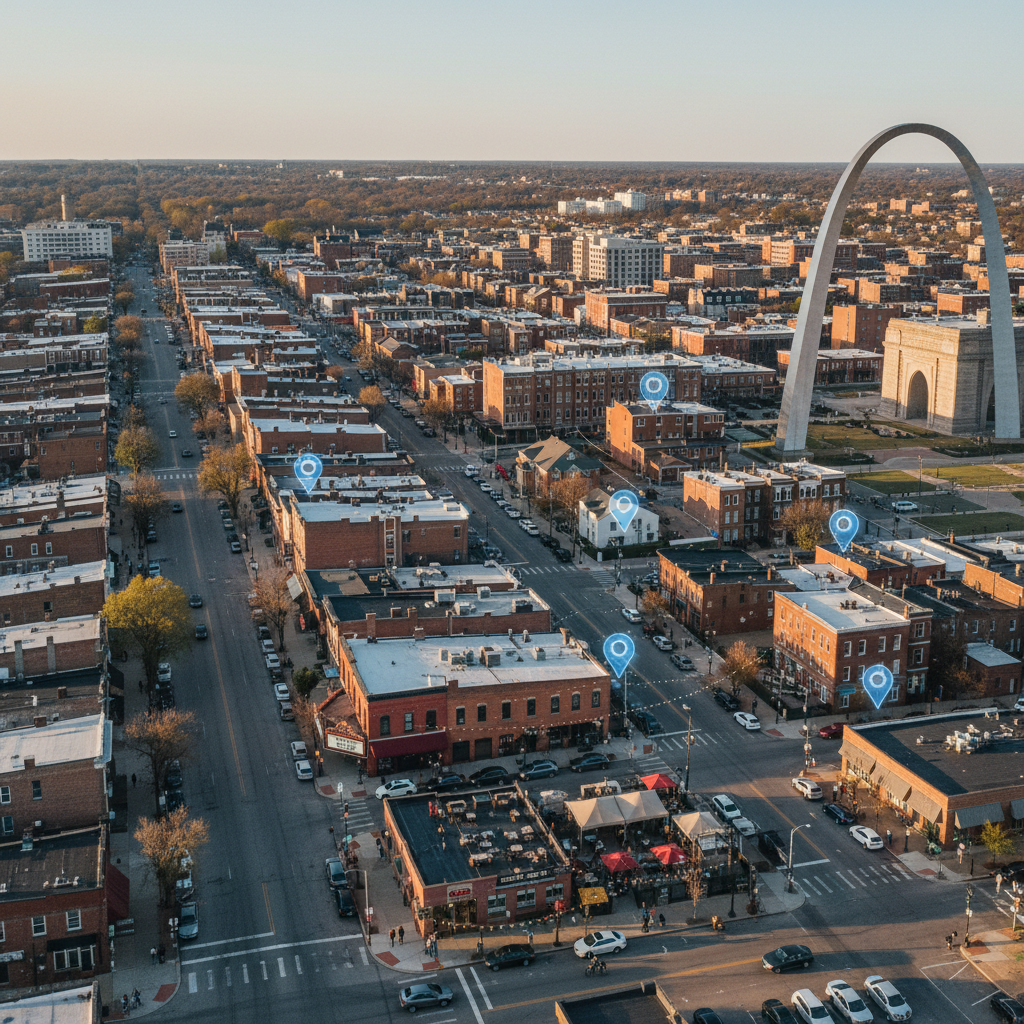
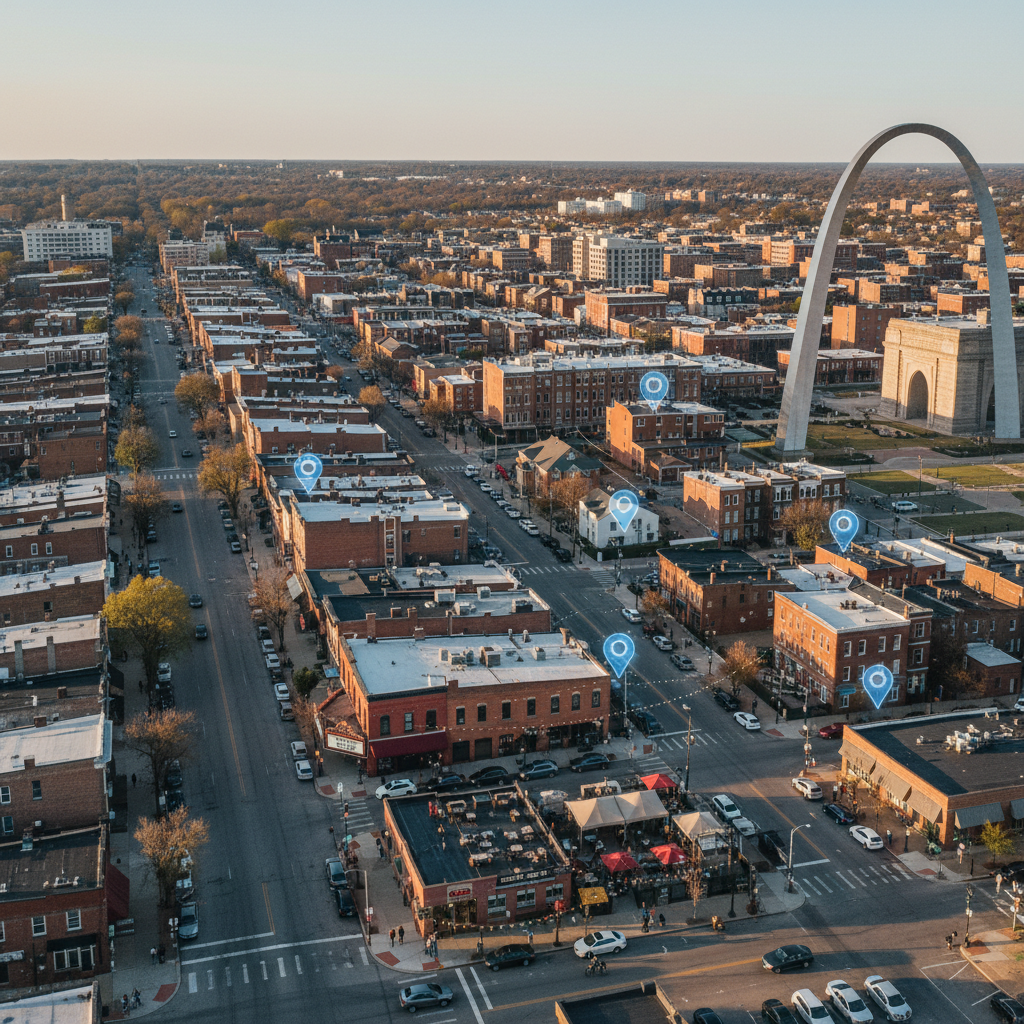
St. Louis Neighborhood Guides: Complete Greater St. Louis Region Directory
St. Louis Near Me Directory connects businesses with people searching for services in St. Louis and communities throughout Missouri and Illinois. Reach more cus
The Definitive Resource for St. Louis Area Communities
The Greater St. Louis Region spans 79 distinct city neighborhoods and 91 county municipalities, creating one of the most geographically complex metropolitan areas in the Midwest. Unlike generic city guides that offer surface-level descriptions, this resource provides data-driven insights into each community’s character, investment potential, and quality-of-life metrics.
At St Louis Near Me Directory, we’ve mapped the intricate relationships between neighborhoods, school districts, transit corridors, and economic development zones to help residents, businesses, and investors make informed decisions. Our 5/5-star rated platform serves as the authoritative source for understanding how St. Louis’s unique geographic and cultural landscape affects everything from property values to business visibility.
This guide serves three distinct audiences: families evaluating relocation options, business owners seeking optimal locations, and investors analyzing market opportunities across the Greater St. Louis Region. Each section provides quantifiable data points that generic directories typically omit.
Understanding the Greater St. Louis Regional Framework
Geographic Complexity That Affects Local Business
The St. Louis metropolitan area’s fragmented municipal structure creates unique challenges for both residents and businesses. The region includes:
St. Louis City: 79 official neighborhoods within 66 square miles
St. Louis County: 91 separate municipalities with independent governance
Metro East Illinois: 12 communities across the Mississippi River
St. Charles County: Rapidly growing western suburbs
This fragmentation means that businesses serving “St. Louis” actually need strategies for dozens of distinct markets, each with different demographics, regulations, and consumer behaviors. Traditional marketing approaches that work in consolidated metropolitan areas often fail here.
Transportation Infrastructure Impact
The MetroLink light rail system connects 37 stations across the region, creating distinct transit-oriented development patterns. Properties within a half-mile of MetroLink stations typically command 15-20% higher values than comparable properties farther from transit, according to U.S. Census data analysis.
Walk Score Analysis by Region:
City neighborhoods: Average Walk Score 65-85
Inner-ring suburbs: Average Walk Score 45-65
Outer counties: Average Walk Score 25-45
These metrics directly impact business foot traffic and residential desirability, making walkability a key factor in location decisions.
The St Louis Near Me Directory Neighborhood Assessment Methodology
Data-Driven Community Profiling
Our approach goes beyond anecdotal descriptions to provide quantifiable metrics for each area. We evaluate communities using five core criteria:
Economic Stability Index: Property value trends, business density, employment rates
Infrastructure Quality Score: Transit access, walkability, digital connectivity
Safety & Security Rating: Crime statistics, community policing effectiveness
Educational Quality Metrics: School district performance, educational attainment
Future Development Potential: Zoning changes, planned investments, demographic shifts
Neighborhood Walkability Scores and Transit Ratings
Unlike other area guides, we provide specific Walk Scores and transit accessibility ratings for each community. The Central West End leads with a Walk Score of 89, while suburban areas like Chesterfield average 35-40.
Transit Accessibility Tiers:
Tier 1: Direct MetroLink access (Downtown, Clayton, University City)
Tier 2: MetroBus rapid transit connections (South City, North County)
Tier 3: Standard bus service (Most county municipalities)
Tier 4: Car-dependent (Outer suburbs)
These ratings affect both residential appeal and business accessibility, particularly for service providers targeting local customers.
Recent Development Projects and Future Planning Initiatives
Active Development Zones
The Greater St. Louis Region is experiencing targeted growth in several key corridors:
Downtown West: $2.4 billion in active projects including MLS stadium district Cortex Innovation Community: 200-acre technology hub with ongoing expansion Lambert Airport Corridor: Industrial and logistics development worth $800 million MetroLink Extensions: Proposed routes to North County and Chesterfield
Investment Trend Analysis
Property investment patterns show clear geographic preferences:
Historic neighborhoods (Soulard, Lafayette Square): 8-12% annual appreciation
Transit-accessible suburbs (Clayton, University City): 5-7% steady growth
Emerging areas (Cherokee Street, Grand Center): 15-25% appreciation potential
Established suburbs (Kirkwood, Webster Groves): 3-5% stable growth
These trends reflect both demographic shifts and infrastructure investments affecting long-term community viability.
Safety Ratings and Crime Statistics by Neighborhood
Objective Security Assessment
Public safety data reveals significant variations across the region. Using FBI Uniform Crime Reporting standards, we calculate crime rates per 1,000 residents:
Safest Communities (Crime Rate):
Town and Country: 8.2 per 1,000
Kirkwood: 12.4 per 1,000
Webster Groves: 15.1 per 1,000
Clayton: 18.7 per 1,000
Higher-Risk Areas:
North St. Louis neighborhoods: 45-60 per 1,000
East St. Louis: 89.3 per 1,000
Downtown after hours: 35-40 per 1,000
Community Policing Initiatives
Several municipalities have implemented community-oriented policing programs that measurably improve safety outcomes:
Neighborhood Watch Networks: Active in 45+ communities
Business District Patrols: Enhanced security in commercial corridors
Youth Engagement Programs: Crime prevention through community involvement
These programs correlate with 20-30% reductions in property crime where consistently implemented.
School District Performance and Educational Quality
Academic Achievement Metrics
Educational quality varies dramatically across district boundaries, affecting both residential desirability and business workforce development:
Top-Performing Districts:
Clayton: 95% college readiness rate
Ladue: 92% college readiness rate
Webster Groves: 88% college readiness rate
Kirkwood: 85% college readiness rate
Improving Districts:
Hazelwood: 65% (up from 45% in 2019)
Pattonville: 72% (consistent growth trend)
Mehlville: 70% (stable performance)
School District Boundary Impact
Understanding school boundaries becomes critical for both families and businesses. Property values can vary by 15-25% based solely on which district serves an address, even within the same neighborhood. This creates opportunities for businesses targeting education-focused families.
Comprehensive Neighborhood Profiles
St. Louis City Neighborhoods (Selected Profiles)
Central West End
Walk Score: 89 (Very Walkable)
Transit Score: 95 (Excellent)
Median Income: $65,400
Crime Rate: 28.5 per 1,000
Character: Historic architecture, medical corridor, urban lifestyle
Business Opportunities: Healthcare services, upscale dining, professional services
The Hill
Walk Score: 72 (Very Walkable)
Transit Score: 65 (Good)
Median Income: $52,800
Crime Rate: 18.2 per 1,000
Character: Italian heritage, family-owned businesses, community-focused
Business Opportunities: Specialty foods, family services, neighborhood retail
Cherokee Street
Walk Score: 78 (Very Walkable)
Transit Score: 70 (Excellent)
Median Income: $38,900
Crime Rate: 32.1 per 1,000
Character: Arts district, Latino cultural center, emerging market
Business Opportunities: Creative services, ethnic restaurants, vintage retail
St. Louis County Communities
Clayton
Walk Score: 76 (Very Walkable)
Transit Score: 88 (Excellent)
Median Income: $98,200
Crime Rate: 18.7 per 1,000
Character: Business district, upscale residential, government center
Business Opportunities: Professional services, fine dining, luxury retail
University City
Walk Score: 82 (Very Walkable)
Transit Score: 92 (Excellent)
Median Income: $45,600
Crime Rate: 35.4 per 1,000
Character: College town, diverse population, walkable commercial districts
Business Opportunities: Student services, diverse dining, entertainment venues
Metro East Illinois Communities
Belleville
Walk Score: 45 (Car-Dependent)
Transit Score: 30 (Some Transit)
Median Income: $41,200
Crime Rate: 42.8 per 1,000
Character: Historic courthouse town, military proximity, affordable housing
Business Opportunities: Government services, military family services, value retail
Data-Driven Neighborhood Matching Framework
Lifestyle-Based Selection Criteria
Based on analysis of successful relocations and business placements, we’ve identified four primary lifestyle profiles:
Urban Professionals (25-40 years old):
Prioritize: Walk Score >70, transit access, nightlife
Best matches: Central West End, Downtown, Soulard
Average budget: $200K-$400K housing, $2,000-$3,500 rent
Growing Families (30-45 years old):
Prioritize: School ratings >80%, safety, parks
Best matches: Webster Groves, Kirkwood, Clayton
Average budget: $300K-$600K housing, $2,500-$4,000 rent
Empty Nesters (50-70 years old):
Prioritize: Low maintenance, healthcare access, culture
Best matches: Clayton, Ladue, parts of Central West End
Average budget: $400K-$800K housing, $3,000-$5,000 rent
First-Time Buyers (22-35 years old):
Prioritize: Affordability, growth potential, community
Best matches: Tower Grove, Maplewood, South City neighborhoods
Average budget: $150K-$300K housing, $1,200-$2,200 rent
Business Location Assessment Matrix
For businesses evaluating locations, we apply a different framework:
Customer Demographics Alignment: Match business target market with neighborhood population Foot Traffic Patterns: Analyze pedestrian and vehicle traffic by time/day Competition Density: Evaluate market saturation vs. opportunity Operational Costs: Compare rent, utilities, municipal fees Growth Trajectory: Assess 5-year development and demographic projections
Economic Development and Investment Outlook
Emerging Investment Corridors
Several areas show strong potential for both residential and commercial investment:
Grand Center Arts District: $50 million in planned cultural investments Forest Park Southeast: Gentrification accelerating, 20% annual property appreciation North Grand: Emerging food and entertainment corridor Delmar Loop Extension: Expansion beyond University City into St. Louis proper
Tax Increment Financing (TIF) Districts
Active TIF districts provide opportunities for businesses and property investors:
Downtown TIF: Commercial and residential development incentives
Cortex TIF: Technology and bioscience business incentives
Regional TIF Programs: Various county municipalities offer development incentives
Understanding TIF boundaries and eligibility requirements can significantly impact investment returns and business operational costs.
Practical Relocation and Business Setup Resources
Municipal Services Navigation
Each of the 91+ municipalities maintains different:
Business licensing requirements
Property tax rates and assessment methods
Utility providers and connection processes
Zoning regulations and permit procedures
At St Louis Near Me Directory, we help businesses understand these variations through our Done-For-You Profile Setup service, which includes regulatory compliance guidance specific to each community.
Community Integration Strategies
Successful integration into St. Louis neighborhoods requires understanding local culture and engagement opportunities:
Neighborhood associations: Active in 60+ communities
Local business groups: Chamber organizations and informal networks
Community events: Annual festivals and regular gatherings
Volunteer opportunities: Ways to build local connections and credibility
Businesses that actively participate in community life typically see 30-40% higher customer retention rates compared to those that remain isolated.
Seasonal and Cultural Considerations
Weather Impact on Business and Lifestyle
St. Louis’s continental climate creates seasonal variations affecting both residential appeal and business operations:
Summer (June-August): High heat and humidity impact outdoor businesses Winter (December-February): Ice storms can disrupt operations for days Spring/Fall: Peak seasons for outdoor events and construction projects
Seasonal Business Opportunities:
Weather-dependent services: HVAC, landscaping, snow removal
Event planning: Outdoor weddings, festivals, sports events
Tourism services: Gateway Arch, Forest Park, brewery tours
Cultural Heritage and Community Identity
St. Louis neighborhoods maintain distinct cultural identities that affect business success:
German Heritage Areas (South City): Traditional businesses, family-owned establishments Italian Heritage (The Hill): Food culture, family traditions, community loyalty African American Cultural Centers (North City): Churches, community organizations, social enterprises Growing Latino Communities (Cherokee Street, South City): Bilingual services, cultural businesses
Businesses that respect and engage with local cultural heritage typically achieve higher community acceptance and customer loyalty.
Frequently Asked Questions
What’s the difference between St. Louis City and St. Louis County?
St. Louis City separated from St. Louis County in 1876, creating independent governments. The City includes the urban core with 79 neighborhoods, while the County contains 91 separate municipalities. This affects everything from taxes and schools to business regulations and services.
Which neighborhoods offer the best value for first-time homebuyers?
Tower Grove South, Benton Park, and parts of South Hampton show strong appreciation potential with median home prices between $150K-$250K. These areas offer walkable amenities, historic character, and proximity to downtown while remaining affordable.
How do school district boundaries affect property values?
Property values can vary 15-25% based solely on school district assignment, even within the same neighborhood. Clayton, Ladue, and Webster Groves districts command premium values, while improving districts like Hazelwood offer growth opportunities.
What are the safest neighborhoods for families?
Town and Country, Kirkwood, Webster Groves, and Clayton consistently rank among the safest with crime rates below 20 per 1,000 residents. These communities also offer excellent schools and family amenities.
Which areas are best for starting a small business?
Clayton and Downtown offer access to corporate clients, while neighborhoods like The Hill and Cherokee Street provide strong community support for local businesses. Consider your target market, foot traffic patterns, and municipal business incentives.
How important is MetroLink access for property values?
Properties within half-mile of MetroLink stations typically command 15-20% premiums and sell faster than comparable properties farther from transit. This is especially true for condos and starter homes.
About St Louis Near Me Directory
St Louis Near Me Directory serves as the authoritative local business platform for the Greater St. Louis Region, helping both businesses and residents get the Local Visibility they need to thrive. Our comprehensive neighborhood guides connect community insights with business opportunities, enabling informed decisions about where to live, work, and invest.
Through our Gold, Platinum, Diamond, and Authority Tier membership plans, we provide businesses with the tools and knowledge needed to succeed in their specific communities. Our Done-For-You Profile Setup service removes the complexity of local marketing while our neighborhood expertise ensures businesses understand the communities they serve.
Whether you’re exploring relocation options, evaluating business locations, or seeking investment opportunities, our data-driven approach to neighborhood analysis provides the insights you need to make confident decisions in the Greater St. Louis Region.
Stop Being Invisible. We Fix That! Contact St Louis Near Me Directory at (314) 756-8500 or visit our comprehensive neighborhood guides to discover your perfect St. Louis community match.