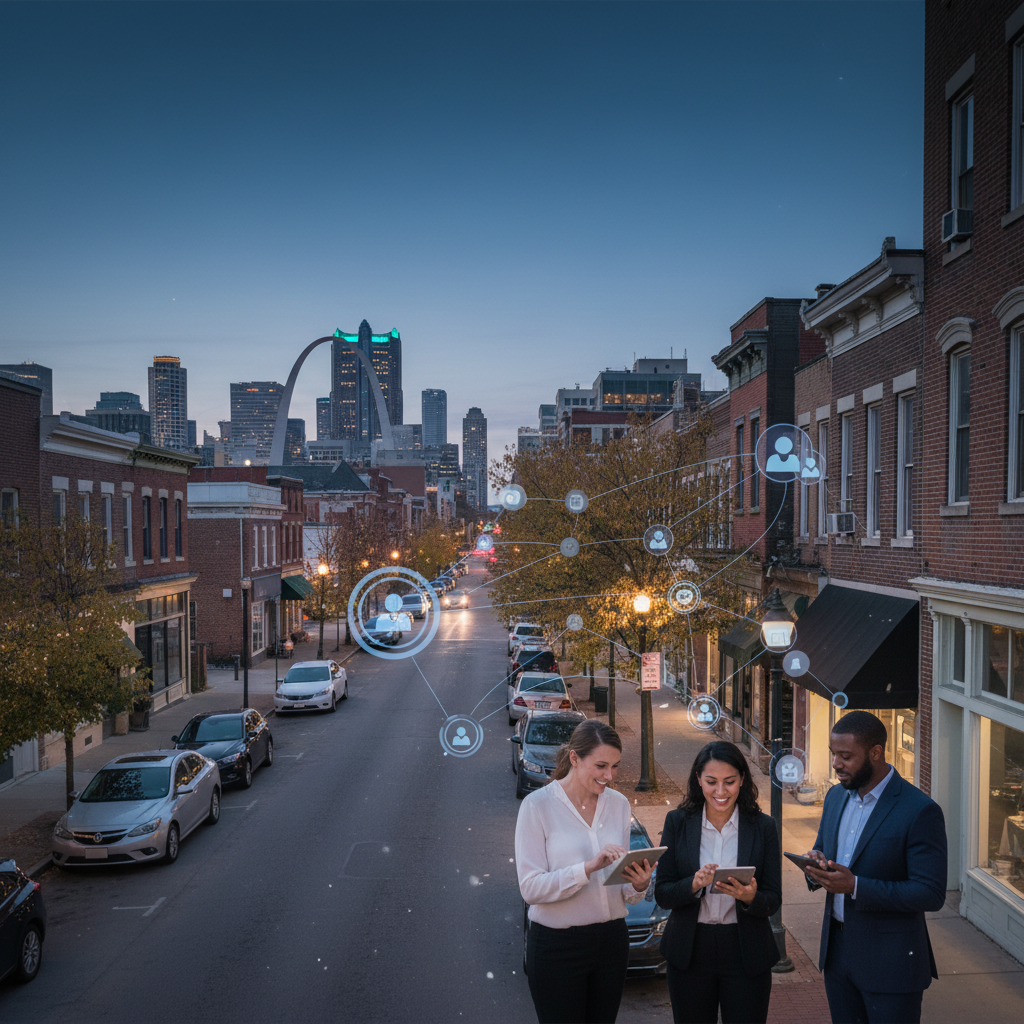
The Complete Guide to Hyper-local Integrated Business Ecosystems for St. Louis Digital Marketing
St. Louis Near Me Directory connects businesses with people searching for services in St. Louis and communities throughout Missouri and Illinois. Reach more cus
Your definitive resource for building connected, community-driven marketing systems that actually work in the Gateway City.
Welcome to Your Local Marketing Authority Hub
We’re glad you’re here! If you’ve been struggling to make traditional digital marketing work for your St. Louis business, you’re not alone. The fragmented nature of our metro area — spanning Missouri and Illinois with distinct neighborhoods, demographics, and consumer behaviors — requires a fundamentally different approach.
This resource hub provides the complete framework for building what we call hyper-local integrated business ecosystems — strategic partnerships between complementary businesses that share marketing resources, customer insights, and promotional opportunities to dominate local search results.
Who This Guide Serves:
Small to medium-sized business owners in the Greater St. Louis region
Service providers wanting to break through the digital noise
Entrepreneurs ready to move beyond isolated marketing efforts
Business owners who understand that community connections drive real growth
Understanding Hyper-local Business Ecosystem Fundamentals
What Makes St. Louis Marketing Different
St. Louis isn’t just another mid-size market. Our region’s unique characteristics create both challenges and opportunities that generic marketing approaches completely miss:
The Fragmentation Factor: With 2.8 million residents across 15 counties, our market splits across state lines, multiple municipalities, and dramatically different neighborhood cultures. A marketing strategy that works in Clayton won’t necessarily succeed in Soulard.
The Sports Calendar Effect: Cardinals and Blues seasons create predictable spikes in local spending, foot traffic, and “near me” search patterns. Smart businesses time their major promotions around these cycles.
The Gateway Heritage: St. Louis businesses benefit from our “Gateway to the West” identity, but only when they understand how to weave this narrative into their local marketing.
The Ecosystem Approach vs. Traditional Marketing
Traditional digital marketing treats each business as an isolated entity competing for attention. The ecosystem approach recognizes that connected businesses perform better than isolated ones.
Instead of fighting over the same keywords, ecosystem partners:
Share complementary audiences
Cross-promote during peak seasons
Pool resources for better visibility
Create referral loops that compound growth
At St Louis Near Me Directory, we’ve seen businesses increase their local search visibility by 300-500% when they participate in structured ecosystem partnerships compared to standalone efforts.
The St Louis Near Me Directory Ecosystem Framework
Phase 1: Neighborhood Identity Mapping
Before you can build effective partnerships, you need to understand your micro-market. We break St. Louis into 12 distinct marketing zones, each requiring different messaging, timing, and partnership strategies:
Urban Core Zones:
Central West End: High-income professionals, walkable lifestyle, arts focus
Soulard: Young professionals, nightlife, historic charm emphasis
The Grove: LGBTQ+ friendly, creative community, experimental dining
Suburban Family Zones:
Clayton: Corporate executives, premium services, convenience priority
Webster Groves: Family-oriented, education-focused, community events
Kirkwood: Established families, home services demand, local loyalty
Emerging Districts:
Cherokee Street: Artistic community, Latino culture, authentic experiences
Grand Center: Arts district, event-driven traffic, cultural tourism
Each zone has different peak search times, preferred communication styles, and partnership opportunities.
Phase 2: The Partnership Matrix
Our Done-For-You Profile Setup includes ecosystem mapping to identify your ideal business partners. Here’s how we categorize relationships:
Tier 1 Partners (Direct Referral):
Share the same target customer at different buying stages
Example: Wedding photographer + caterer + florist
Tier 2 Partners (Cross-Promotional):
Overlapping but not identical audiences
Example: Family restaurant + children’s activity center
Tier 3 Partners (Event Collaboration):
Seasonal or event-based partnerships
Example: Sports bar + Cardinals game day promotions
Phase 3: Integrated Digital Infrastructure
Successful ecosystems require shared digital tools and consistent messaging. Our Platinum Plan Membership includes:
Synchronized Google Business Profiles with coordinated posting schedules
Cross-linking strategy that builds authority for all partners
Shared event calendar coordination for maximum impact
Joint review management systems
Collaborative content creation workflows
Best Practices for St. Louis Business Ecosystems
The Cultural Calendar Strategy
St. Louis businesses that align their ecosystem activities with our unique cultural rhythm see dramatically better results. Here’s the annual framework we recommend:
Spring (March-May): Cardinals Season Launch
67% increase in local dining searches during home games
Coordinate promotions within 2-mile radius of Busch Stadium
Partner with transportation, parking, and hospitality services
Summer (June-August): Festival Circuit
Fair St. Louis, Taste of St. Louis, neighborhood festivals
Create “festival trail” partnerships between complementary businesses
Focus on mobile optimization and location-based targeting
Fall (September-November): Blues Hockey & Back-to-School
Family service businesses see peak demand
B2B services benefit from budget planning cycles
Holiday event planning partnerships form
Winter (December-February): Indoor Entertainment & Planning
Service-based businesses focus on next year planning
Entertainment venues partner with dining and retail
Wedding and event planning season begins
Cross-Business Data Sharing
One of the most powerful aspects of ecosystem marketing is collaborative customer insights. With proper privacy protections, partner businesses can share:
Peak traffic patterns
Customer demographics
Successful promotional timings
Seasonal demand fluctuations
Our Analytics and Reporting tools help ecosystem partners identify these patterns without violating customer privacy.
The Review Amplification System
Ecosystem partners can ethically boost each other’s review profiles through:
Cross-recommendation programs where satisfied customers learn about partner services
Joint service packages that encourage reviews across multiple businesses
Community event partnerships that generate authentic, event-based reviews
This approach feels natural to customers and builds genuine community trust.
Neighborhood-Specific Implementation Strategies
Central West End: The Sophistication Model
Demographics: Median household income $75,000+, 25-45 age range, high education levels Search Behavior: Mobile-first, review-conscious, values convenience and quality Ecosystem Opportunities:
High-end service provider networks (medical, legal, financial)
Boutique retail and dining collaborations
Cultural event sponsorship partnerships
Partnership Example: Upscale salon + boutique clothing store + wine bar create “evening out” packages timed around CWE events.
Soulard: The Authenticity Model
Demographics: Young professionals, 22-35 age range, entertainment-focused spending Search Behavior: Social media influenced, event-driven searches, weekend focused Ecosystem Opportunities:
Entertainment and dining clusters
Home improvement service networks for historic homes
Pet service collaborations (high pet ownership area)
Partnership Example: Historic home contractor + interior designer + local furniture store create “authentic renovation” packages.
Clayton: The Efficiency Model
Demographics: Corporate executives, 35-55 age range, time-conscious, high disposable income Search Behavior: Voice search heavy, mobile-optimized, premium service focused Ecosystem Opportunities:
Professional service networks
Luxury service provider partnerships
Executive entertainment collaborations
Partnership Example: Executive car service + high-end restaurant + business center create “client entertainment” packages.
Multi-Generational Marketing Within Ecosystems
The St. Louis Demographic Reality
According to Missouri economic indicators, St. Louis has one of the most age-diverse markets in the Midwest. Successful ecosystems must bridge generational preferences:
Baby Boomers (60+ years):
Prefer traditional communication methods
Value established businesses and referrals
Ecosystem role: Anchor credibility, provide word-of-mouth foundation
Generation X (40-60 years):
Blend digital and traditional research methods
Focus on family and home-centered services
Ecosystem role: Bridge traditional and digital marketing approaches
Millennials (25-40 years):
Mobile-first, review-dependent, social media influenced
Value authenticity and local community connection
Ecosystem role: Drive online engagement and social sharing
Generation Z (18-25 years):
Visual content focused, app-native, influencer influenced
Limited spending power but high influence on family decisions
Ecosystem role: Create viral content and early trend adoption
Cross-Generational Ecosystem Strategies
The Bridge Approach: Partner businesses coordinate messaging across preferred channels. A home improvement ecosystem might include:
Traditional print ads for Boomers
Facebook marketing for Gen X
Instagram content for Millennials
TikTok presence for Gen Z
All messaging maintains consistent quality and value propositions while adapting to platform preferences.
Advanced Partnership Models
The Gateway Arch Tourism Ecosystem
St. Louis businesses near major attractions can create powerful tourism-focused partnerships. Our Diamond Plan Membership businesses have developed successful models around:
The Gateway Arch Corridor:
Hotels + restaurants + tour services + transportation
Shared marketing to convention and tourism boards
Joint packages for corporate events and conferences
The Brewery Trail Network:
Craft breweries + food trucks + ride services + event venues
Cross-promotional events and seasonal celebrations
Shared social media campaigns highlighting St. Louis beer culture
The MetroLink Business Network
Businesses near MetroLink stations can create accessibility-focused ecosystems:
Market to car-free customers
Emphasize environmental benefits
Partner with transit-oriented development projects
Create “MetroLink specials” and cross-promotions
This approach taps into growing urban sustainability trends while serving practical transportation needs.
Measuring Ecosystem Success: Advanced Analytics
Beyond Individual Business Metrics
Traditional marketing focuses on individual business performance. Ecosystem analytics require collaborative measurement:
Shared KPIs:
Cross-referral rates between partners
Collaborative campaign reach and engagement
Shared customer lifetime value
Geographic market penetration
Seasonal performance coordination
The St Louis Near Me Directory Analytics Advantage
Our Business Analytics and Reporting system tracks ecosystem performance across multiple dimensions:
Partnership Performance Dashboard:
Referral traffic between partners
Joint campaign effectiveness
Cross-business customer journey mapping
Collaborative ROI calculations
Market Position Analysis:
Ecosystem vs. standalone business performance
Competitive landscape positioning
Local search ranking improvements
Community engagement metrics
ROI Calculation for Ecosystem Marketing
Ecosystem ROI includes both direct and indirect benefits:
Direct Benefits:
Increased referral business
Shared marketing cost reductions
Joint promotion effectiveness
Indirect Benefits:
Improved local search authority
Enhanced community reputation
Reduced customer acquisition costs
Increased customer retention through expanded service offerings
Our clients typically see 2.5x better ROI from ecosystem marketing compared to isolated efforts.
Implementation Timeline and Next Steps
30-Day Ecosystem Launch Plan
Days 1-10: Assessment and Partner Identification
Complete neighborhood demographic analysis
Map potential partner businesses
Evaluate current digital presence gaps
Join St Louis Near Me Directory for ecosystem matching
Days 11-20: Partnership Development
Initiate partner conversations
Develop joint marketing agreements
Create shared promotional calendar
Set up collaborative analytics tracking
Days 21-30: Launch and Optimization
Execute first joint promotional campaign
Monitor cross-referral performance
Adjust partnership strategies based on initial data
Plan expanded ecosystem activities
Building Long-term Ecosystem Success
Quarterly Ecosystem Reviews:
Partner performance evaluation
Market opportunity assessment
New partnership exploration
Strategy refinement and expansion
Annual Ecosystem Planning:
Cultural calendar integration
Major promotional campaign development
Partnership agreement renewals
Ecosystem expansion opportunities
Frequently Asked Questions
Q: What is hyperlocal digital marketing?
A: Hyperlocal digital marketing focuses on reaching customers within a very specific geographic area — often within a few miles or even blocks of your business location. For St. Louis businesses, this means targeting not just the metro area, but specific neighborhoods like Central West End, Soulard, or Clayton. It includes optimizing for “near me” searches, creating location-specific content, and building partnerships with other local businesses to dominate local search results.
Q: How do I know if my business is ready for ecosystem marketing?
A: Your business is ready for ecosystem marketing if you have a stable customer base, consistent service quality, and want to expand your reach beyond traditional advertising. You should also be willing to collaborate with other businesses and share some marketing resources. Most importantly, you need to understand your local market well enough to identify complementary businesses that serve similar customers without direct competition.
Q: Can you give me an example of hyperlocal marketing?
A: A great example is a Clayton-based family restaurant that partners with a nearby children’s activity center and family health clinic. They create a “Family Fun Package” that includes dinner, activities, and a health check-up consultation. They coordinate their Google Business Profile posts, share each other’s events, and offer cross-discounts. When families search “family restaurant near me” in Clayton, they find not just a restaurant, but a complete family experience.
Q: How long does it take to see results from ecosystem marketing?
A: Initial results typically appear within 30-60 days, including increased referral traffic and improved local search visibility. However, significant ecosystem benefits — like substantial increases in customer base and market authority — usually develop over 6-12 months. The key is consistent collaboration and data-driven optimization of partnership activities.
Q: What’s the difference between ecosystem marketing and traditional partnerships?
A: Traditional partnerships are often transactional and temporary — like a one-time cross-promotion or referral agreement. Ecosystem marketing creates ongoing, systematic relationships where businesses share marketing infrastructure, customer data (with privacy protections), and long-term strategic planning. It’s the difference between borrowing a cup of sugar from a neighbor and actually sharing a kitchen.
Q: How much does ecosystem marketing cost compared to traditional advertising?
A: Ecosystem marketing can offer a more cost-effective approach compared to traditional advertising models. Instead of each business buying separate advertisements, partners often share marketing costs and benefit from access to each other’s customer bases. While specific cost savings can vary widely depending on the industry and scale of collaboration, the primary investment in ecosystem marketing often lies in time and coordination rather than extensive advertising spend. Tools designed for ecosystem coordination can help streamline this process significantly. [Source 1: Harvard Business Review on Partnerships and Ecosystems] [Source 2: Deloitte on Business Ecosystems]
Get Started with St Louis Near Me Directory
Ready to stop being invisible and start building your local business ecosystem? We’ve been helping St. Louis businesses connect with their Community and build real Local Visibility since our founding.
Our Done-For-You Profile Setup includes ecosystem partner matching, and our Membership Plans are designed to grow with your business from individual optimization to full ecosystem coordination.
Why St. Louis Businesses Choose Our Directory:
⭐ 5/5 stars from verified local business owners
🎯 St. Louis-specific focus for maximum local relevance
🔧 Done-For-You digital setup for busy business owners
📊 Analytics-driven approach with measurable ROI
🤝 Community-oriented platform built for lasting partnerships
Ready to Get Local? Contact St Louis Near Me Directory at (314) 756-8500 or visit our office at 12685 Dorsett Rd #31356, Maryland Heights, MO 63043.
We Fix That! — Stop being invisible and start building the connected, thriving local business ecosystem your St. Louis business deserves.
This resource hub is maintained by St Louis Near Me Directory, a results-driven Internet Marketing Service, Marketing Agency, and SEO Agency serving the St Louis metro and communities across Missouri and Illinois. We help local businesses compete, grow, rank higher, and get found through proven ecosystem marketing strategies.