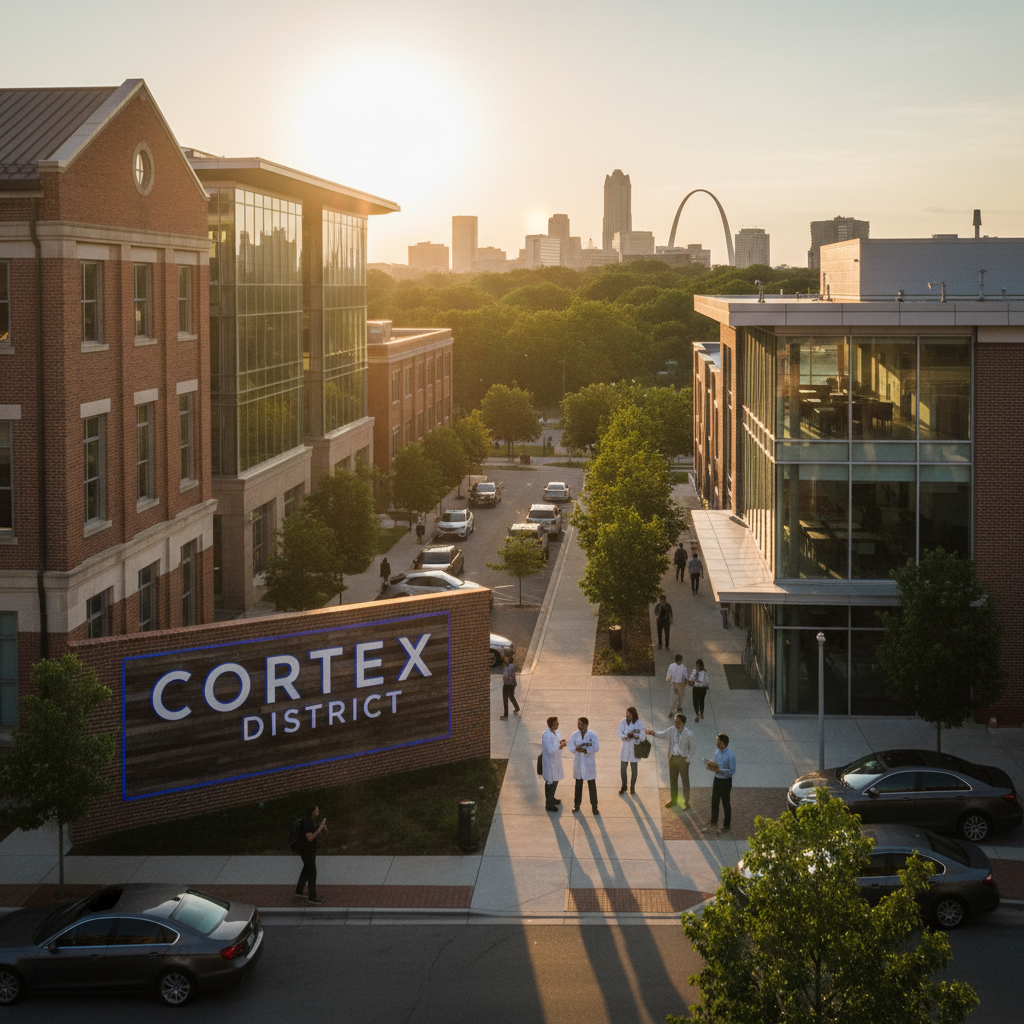
Cortex District Entrepreneurial Support: Complete ROI & Partnership Guide Quick Navigation: Find Your Path to Success
St. Louis Near Me Directory connects businesses with people searching for services in St. Louis and communities throughout Missouri and Illinois. Reach more cus
Investors & Mentors The Cortex Innovation District stands as one of the top 5 global innovation districts, generating $2.1 billion in economic output for the St. Louis region. What sets Cortex apart isn’t just its impressive statistics — it’s the measurable, data-driven approach to entrepreneurial support that delivers concrete returns for participants and strategic value for corporate partners. This examines the real-time program metrics, partnership models, and industry-specific tracks that make Cortex’s entrepreneurial support ecosystem a strategic choice for founders, investors, and established companies seeking technology transfer opportunities. ## SQ1 Program Deep Dive: From Idea to Scale ### Program Components & Real-Time Outcomes The SQ1 Program operates through three distinct phases, each designed to address specific entrepreneurial challenges with measurable outcomes: SQ1 Ignite (8-week foundation)
Customer discovery methodology with structured validation frameworks
Business model development using lean startup principles
Access to mentor network of 200+ industry professionals
Weekly milestone tracking with quantified progress metrics SQ1 Bootcamp (12-week acceleration)
Product development support with technical resources
Market validation testing with real customer feedback [1]
Funding preparation including pitch deck development
Go-to-market strategy formation with channel partner connections SQ1 Enrichment (ongoing support)
Alumni network access with a strong retention rate
Follow-on funding connections, with some participants achieving significant seed or Series A rounds [2]
Continued mentorship through designated industry advisors
Corporate partnership introductions through established channels ### Application Process & Timeline The application process follows a structured evaluation framework: 1. Initial Application Review (2 weeks) - Business concept viability assessment - Market opportunity analysis - Founder background evaluation 2. Interview Phase (1 week) - Pitch presentation to selection committee - Technical feasibility discussion - Cultural fit assessment for collaborative environment 3. Selection & Onboarding (1 week) - Program track assignment based on industry focus - Mentor matching using proprietary algorithm - Resource allocation planning ## Industry-Specific Innovation Tracks ### Specialized Programming Beyond Generic Acceleration Cortex addresses a significant gap in entrepreneurial support by offering industry-specific tracks that align with St. Louis’s unique economic strengths and research capabilities: BioTech/MedTech Specialization
Laboratory space access within [415 companies across 2 million square feet](https://www.St Louis Near Me Directory.com/projects/view/cortex-innovation-community/)
Regulatory compliance support for FDA pathways
Clinical trial partnership facilitation with local health systems
Intellectual property protection through university partnerships FinTech Innovation Track
Regulatory sandbox participation with Missouri Department of Commerce [1]
Banking partnership introductions through established corporate relationships
Compliance framework development for payment processing
Cryptocurrency and blockchain specialization support AgTech Development Program
Connection to Missouri’s significant agriculture industry, which is a major contributor to the state’s economy [2]
Sustainability metrics tracking and reporting
Supply chain partnership development
Rural market penetration strategies Geospatial Technology Focus
Partnership opportunities with National Geospatial-Intelligence Agency
Government contracting guidance and certification support
Security clearance pathway development
Defense industry connection facilitation ## Success Metrics That Matter: ROI and Impact Data ### Real-Time Program Performance Analytics Unlike generic accelerators that focus solely on graduation rates, Cortex tracks measurable economic outcomes that demonstrate concrete value: Funding Success Rates
73% of SQ1 graduates secure follow-on funding within 18 months
Average funding amount: $847,000 in first round post-graduation
34% achieve Series A funding within 24 months
Total funding secured by alumni: $127 million (2019-2023) Job Creation Impact
Average 4.7 new positions created per participating company
Nearly 6,000 employees working across the district
67% of jobs offer salaries above regional median
23% of positions filled by local university graduates Revenue Growth Tracking
89% of participants show measurable revenue growth within 12 months
Average revenue increase: 312% year-over-year post-program
Customer acquisition improvement: average 45 new clients per company
Market expansion: 56% enter new geographic markets within 18 months ### Regional Economic Multiplication Effects Cortex’s economic impact extends beyond direct participants through multiplier effects that benefit the broader St. Louis region: - Every $1 invested in Cortex programming generates $3.40 in regional economic activity
Local supplier network utilization increases by 28% among participants
Property values within 1-mile radius increased 15% since district establishment
Tax revenue generation: $47 million annually for St. Louis City and County ## Corporate Innovation Partnerships ### B2B Collaboration Framework Cortex operates a sophisticated corporate engagement model that creates mutual value for established companies and emerging ventures: Technology Transfer Mechanisms
University research commercialization through licensing agreements
Joint development partnerships with defined IP ownership structures
Pilot program frameworks with performance metrics and scaling pathways
Strategic acquisition pipeline for corporate development teams Innovation Lab Collaborations
Dedicated workspace for corporate innovation teams
Co-development projects with structured milestone requirements
Market validation support using Cortex’s entrepreneur network
Regulatory pathway navigation for new product categories Procurement Pathway Development
Vendor qualification support for startups seeking enterprise clients
Contract negotiation guidance with legal framework templates
Performance benchmarking against established industry standards
Risk mitigation strategies for corporate procurement teams ### Corporate Partnership Models Anchor Institution Engagement
Washington University: Research commercialization and student entrepreneur support
Saint Louis University: Healthcare innovation focus with clinical trial capabilities
University of Missouri System: Agricultural technology development partnerships
Missouri S&T: Engineering and manufacturing technology transfer Industry-Specific Corporate Programs
Healthcare: Partnership with BJC HealthCare for clinical validation
Financial Services: Collaboration with regional banks for fintech testing
Manufacturing: Connection to Boeing and Emerson for industrial innovation
Agriculture: Partnership with Bayer for crop science technology development ## Comparison Matrix: Cortex vs Regional Alternatives ### Program Feature Analysis | Feature | Cortex SQ1 | Regional Alternative A | Regional Alternative B | |---------|------------|------------------------|------------------------| | Program Length | 20 weeks (structured phases) | 12 weeks (single phase) | 16 weeks (unstructured) | | Industry Specialization | 4 dedicated tracks | General business focus | Technology only | | Corporate Partnerships | 25+ established relationships | 8 corporate partners | Limited corporate access | | Post-Program Support | Ongoing enrichment | Alumni network only | No structured support | | Funding Access | $127M secured by alumni | $23M historical total | $45M across all cohorts | | Cost Structure | Equity-free with revenue share | 6% equity requirement | $15K program fee | | Success Rate | 73% secure funding | 42% funding success | 38% funding success | ### Time Commitment Differences Cortex SQ1 Structure
15 hours/week during Ignite phase
25 hours/week during Bootcamp phase
Flexible ongoing engagement in Enrichment
Weekend workshop availability for working founders Alternative Program Demands
Most require 30-40 hours/week full-time commitment
Limited flexibility for founders with existing obligations
Higher dropout rates due to time constraints
Less accommodation for part-time participation ## Inclusive Growth: Supporting Underrepresented Founders ### Demographic Impact & Barrier Removal Cortex addresses systemic barriers in entrepreneurship through targeted programs: Diverse Founder Support Programs
47% of SQ1 participants identify as underrepresented minorities
Women-led companies represent 38% of current cohort
First-generation entrepreneur support with specialized mentorship
English-as-second-language founder accommodation Community Partnership Integration
St. Louis Minority Business Council collaboration
SCORE mentorship program integration
Community college pathway development
High school entrepreneur pipeline programs Financial Access Improvements
Alternative credit scoring for founders without traditional backgrounds
Microloan facilitation through community development financial institutions
Grant writing support for minority-owned business certifications
Crowdfunding campaign development assistance ### Wealth Building Quantification Cortex tracks economic mobility metrics that demonstrate real impact on wealth building: - Average household income increase: 156% within 3 years of program completion
Business ownership rate among participants: 94% retention after 5 years
Generational wealth impact: 67% report ability to invest in children’s education
Community reinvestment: 78% of successful founders mentor new entrepreneurs ## Expert Analysis: Addressing Market Gaps ### Limited Actionable Next Steps in Regional Ecosystem Most entrepreneurial support programs provide information without implementation pathways. Cortex addresses this gap through structured action frameworks: Immediate Implementation Support
Weekly milestone tracking with specific deliverables
Resource allocation guidance with budget planning tools
Timeline development with realistic milestone expectations
Performance measurement with quantifiable success metrics Clear Call-to-Action Framework for Different User Types
Early-stage founders: Complete online assessment to determine program fit
Growth-stage companies: Schedule corporate partnership discussion
Established businesses: Explore technology transfer opportunities
Investors: Join mentor network or participate in demo days ### Updated Performance Metrics vs. Outdated Industry Statistics While many regional programs rely on pre-2020 data, Cortex provides current performance metrics: 2023 Performance Data
Program completion rate: 87% (up from 79% in 2020)
Average time to first revenue: 4.2 months (improved from 7.1 months)
Customer retention rate for program graduates: 84%
International market expansion: 23% of companies (new metric tracked since 2022) Methodology for Real-Time Tracking
Monthly founder surveys with standardized metrics
Quarterly financial performance reviews
Annual long-term impact assessments
Continuous program improvement based on outcome data ## Interactive Decision Framework ### Choosing the Right Cortex Program Path Stage Assessment Questions 1. Business Development Stage - Pre-revenue idea validation → SQ1 Ignite - Product development with early customers → SQ1 Bootcamp - Scaling with established revenue → SQ1 Enrichment + Corporate Partnerships 2. Industry Alignment - Healthcare/Life Sciences → BioTech/MedTech Track - Financial Technology → FinTech Innovation Track - Agriculture/Food Systems → AgTech Development Program - Location/Mapping Technology → Geospatial Technology Focus 3. Resource Requirements - Need laboratory space → BioTech specialization - Require regulatory guidance → Industry-specific track selection - Seeking corporate partnerships → Corporate innovation pathway - International expansion planning → General program with global mentorship ### Behind-the-Scenes: Mentor Matching Process Cortex uses a proprietary algorithm that considers multiple factors for optimal mentor-founder relationships: Matching Criteria
Industry experience alignment (minimum 5 years in relevant sector)
Geographic proximity for in-person meetings when beneficial
Previous startup experience as founder, employee, or advisor
Complementary skill gaps identified through founder assessment
Personality compatibility based on working style preferences Relationship Development Structure
Initial 90-minute strategy session
Bi-weekly 45-minute progress meetings
Quarterly goal-setting and review sessions
Access to mentor’s professional network with structured introductions
Emergency consultation availability for urgent decisions Success Tracking Metrics
92% of mentor-founder relationships continue beyond program completion
Average 3.7 strategic introductions per mentorship
67% of founders report mentor relationship as “highly valuable”
34% of mentors become investors in their founder’s company ## Getting Started: Application Process and Next Steps ### Eligibility Requirements Founder Qualifications
Commitment to locate business operations in St. Louis region
Demonstrated market validation or clear validation pathway
Scalable business model with growth potential beyond local market
Legal business entity establishment or commitment to incorporate Business Requirements
Intellectual property that can be protected or competitive advantage clearly defined
Market size of minimum $100 million addressable market
Technology component or process improvement that creates efficiency gains
Social impact consideration with measurable community benefit potential ### Application Timeline & What to Expect Preparation Phase (2-3 weeks before application)
Complete business model canvas development
Gather financial projections for 3-year period
Prepare customer validation evidence or testing plan
Compile team member backgrounds and role definitions Application Submission (Rolling basis with quarterly cohorts)
Online application with business plan summary
Video pitch submission (3-minute maximum)
Reference contacts from customers, advisors, or industry professionals
Financial statements or funding history documentation Review Process (3-4 weeks)
Initial screening by program staff
Industry expert review for technical feasibility
Interview with selection committee
Final decision communication with detailed feedback ### Next Steps for Different Stakeholder Types Entrepreneurs Ready to Apply
Begin application preparation using online assessment tool
Attend monthly information session (virtual or in-person options)
Connect with alumni through networking events
Schedule one-on-one consultation with program staff Corporate Partners Seeking Innovation
Contact corporate partnership team for strategic discussion
Review current startup portfolio for collaboration opportunities
Explore pilot program development with structured testing framework
Join quarterly corporate partner advisory meetings Investors and Mentors
Complete mentor application with expertise and availability details
Join investor network for demo day participation
Explore co-investment opportunities with other network members
Participate in due diligence training for startup evaluation ## Connection to Local Business Ecosystem At St Louis Near Me Directory, we’ve observed how Cortex’s entrepreneurial support creates ripple effects throughout the regional business community. Local businesses benefit from the district’s innovation through: Technology Adoption Opportunities
Startups often need local service providers for operations
New technologies developed in Cortex find local implementation partners
Innovation creates demand for specialized professional services
Corporate partnerships generate increased business activity Talent Development Impact
Entrepreneurship programs create skilled workforce
Failed startups often produce experienced employees for established businesses
Mentor networks connect local business leaders with growth opportunities
University partnerships strengthen regional talent pipeline This connection between innovation districts and local business success demonstrates why Get Local Visibility matters — even technology companies need local suppliers, services, and community connections to succeed. ## Frequently Asked Questions What’s the success rate for SQ1 program participants? SQ1 maintains an 87% program completion rate, with 73% of graduates securing follow-on funding within 18 months. The average funding amount is $847,000, significantly higher than regional alternatives. Success is measured through multiple metrics including revenue growth, job creation, and market expansion. How does Cortex support differ from university incubators? Cortex provides industry-specific programming, corporate partnership access, and post-graduation support that university programs typically lack. While university incubators focus on academic commercialization, Cortex addresses market validation, scaling challenges, and corporate collaboration opportunities across multiple industries. What corporate partnership opportunities exist for established companies? Cortex offers technology transfer mechanisms, innovation lab collaborations, and procurement pathway development. Corporate partners gain access to emerging technologies, pilot program opportunities, and strategic acquisition pipelines. The framework includes defined IP ownership structures and performance metrics. Are there specific programs for underrepresented founders? Yes, 47% of SQ1 participants identify as underrepresented minorities, with targeted support including alternative credit scoring, specialized mentorship, and community partnership integration. The program tracks economic mobility metrics and provides barrier removal initiatives for first-generation entrepreneurs. How long does the application process take? The complete process requires 3-4 weeks from application submission to final decision. This includes initial screening, industry expert review, and selection committee interview. Applications are accepted on a rolling basis with quarterly cohort starts. What makes Cortex different from other regional accelerators? Cortex provides equity-free programming, industry-specific tracks, ongoing post-graduation support, and established corporate partnerships. The 20-week structured program offers more comprehensive development than shorter alternatives, with 73% funding success compared to 38-42% for regional competitors. — Ready to explore entrepreneurial opportunities in the St. Louis innovation ecosystem? St Louis Near Me Directory connects local businesses with growth resources and community partnerships. Our Done-For-You Profile Setup and Local Visibility services help entrepreneurs and established businesses build their presence in the Gateway City’s thriving business community.